
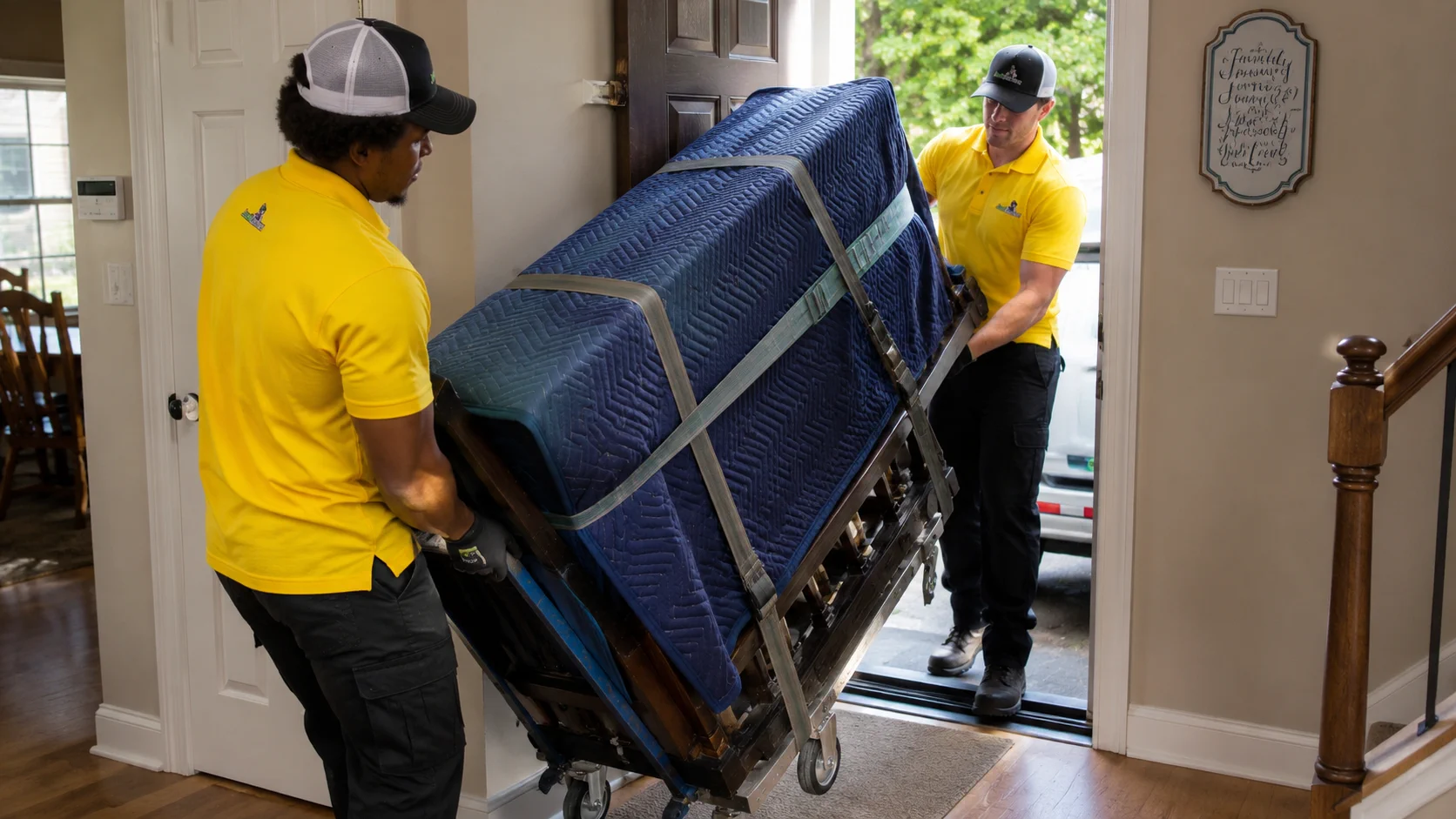
Why Piano Removal Is a Specialty, Not a Standard Haul
An upright piano is one of the heaviest single objects in most homes, and it can’t be broken down into manageable parts. The legs come off, the pedal assembly detaches, and the cabinet goes through the door on its side.
Our piano removal process for upright-style pianos:
- Assess the route from current location to the truck before touching the piano
- Remove legs and pedal assembly
- Wrap and pad the cabinet corners and any exposed surfaces
- Move through the doorframe on its side, one person controlling pace
- Carry down stairs one step at a time with a dedicated spotter
- Load onto the truck using a piano dolly and tie-down straps
What Determines the Final Price
Piano removal isn’t flat-rate because access conditions vary too much between jobs. The main factors:
- Piano type: spinets and consoles are lighter than full uprights and player pianos
- Location: ground floor with clear access vs. second floor or basement with stair work
- Stair count and width: a wide staircase handles differently than a narrow 90-degree turn
This is priced differently from a standard furniture removal job. Let us know what else needs to go when you call.