
What You Need to Do Before We Arrive
Disconnection is on you. We don’t perform plumbing, electrical, or gas work. Before our crew arrives:
- Refrigerators and freezers: take out any food you want to keep and unplug the unit. If it has an icemaker, shut off the water valve. No need to defrost or clean it out.
- Washers: shut off both water valves and unplug it.
- Electric dryers: unplug it and disconnect the vent hose.
- Gas dryers: have a licensed plumber shut off and cap the gas line. Disconnect the vent hose.
- Gas stoves and ranges: capped gas line required, handled by a licensed plumber.
- Electric stoves and wall ovens: disconnect the power at the breaker or have an electrician do it. Wall ovens need to be unbolted from the cabinet.
- Built-in dishwashers: fully uninstalled before we arrive, with water, drain, and electrical disconnected. A plumber or handyman handles that work.
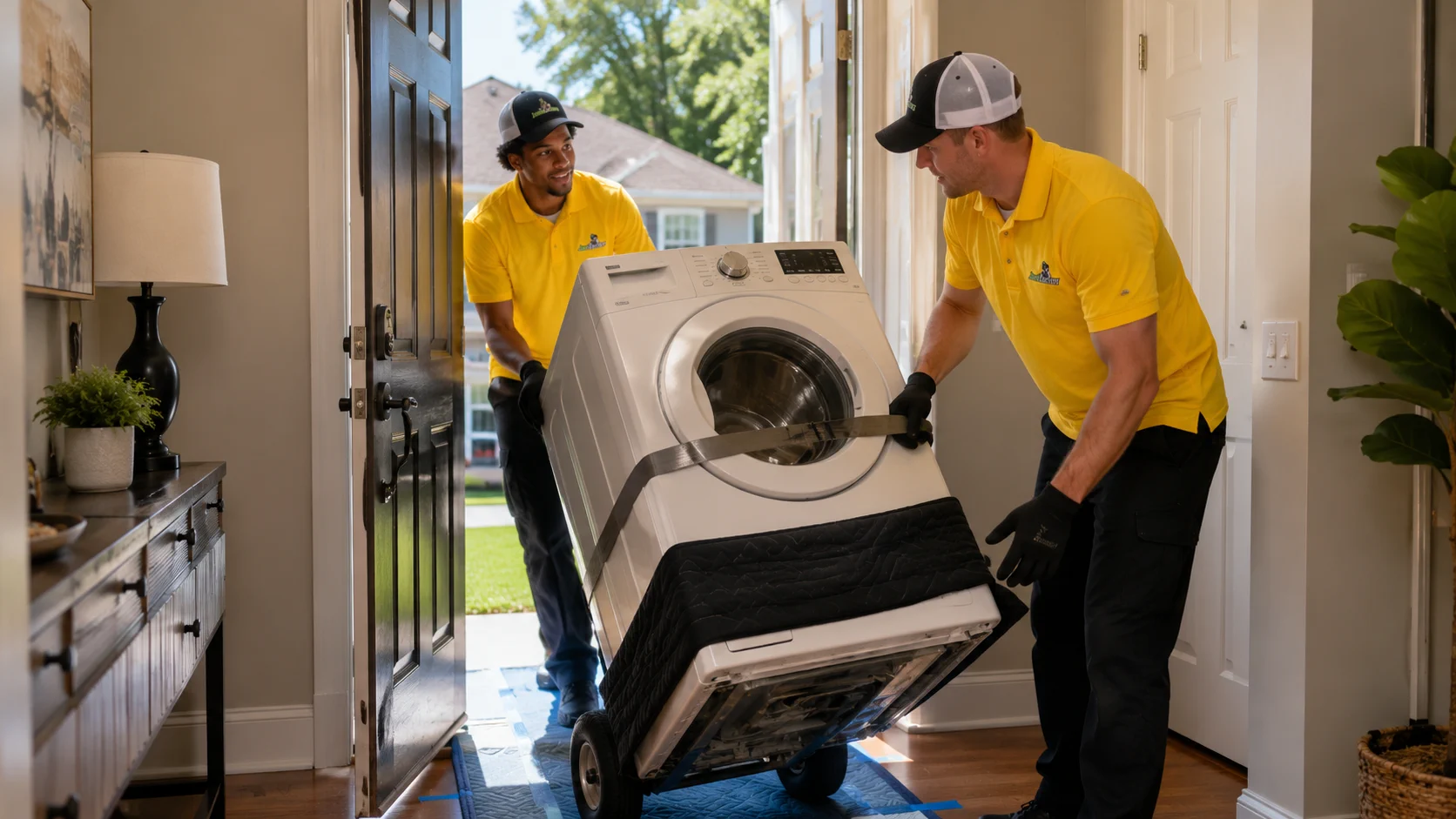
Once the appliance is disconnected and accessible, we handle the heavy part: pulling it out, stairs, loading, and disposal.
Why Refrigerant Handling Matters
Refrigerators, chest freezers, window AC units, and older dehumidifiers contain federally regulated refrigerants that cannot go to a standard landfill.
We route them to area processors that capture the refrigerant before scrapping, per EPA Section 608.
If you’re clearing a kitchen remodel, see our furniture removal page. For full-property situations, estate cleanouts and garage cleanouts handle appliances as part of the larger job.