
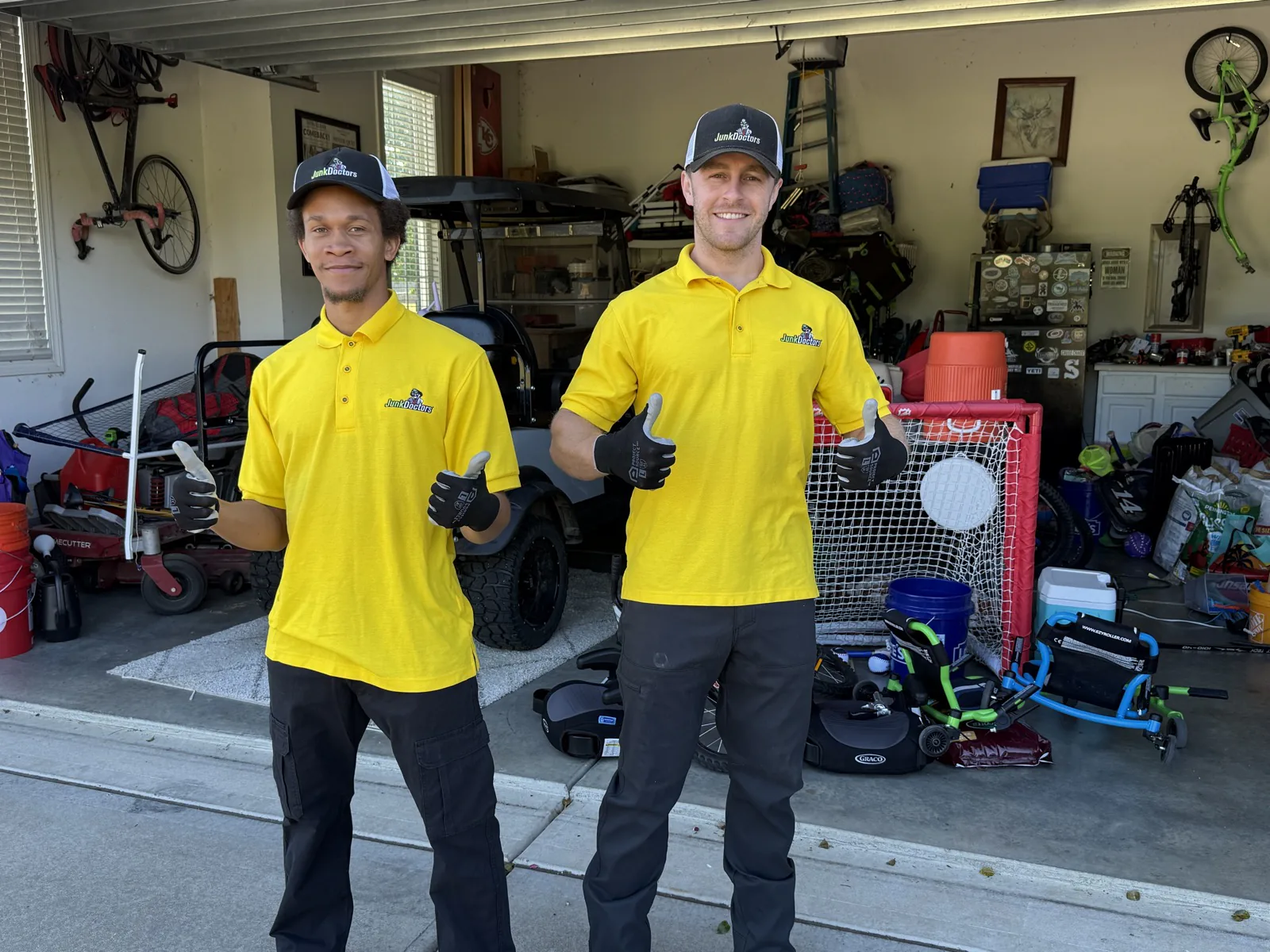
What Makes a Garage Cleanout Different from a Standard Haul
Garage cleanouts rarely have a clear inventory. A garage accumulates everything that didn’t have a home elsewhere: tools from three different eras, a lawnmower that hasn’t started in four years, sporting equipment for sports nobody plays anymore.
Nothing is pre-sorted, and some of it has been sitting long enough that you’re not sure what’s under the pile in the back corner.
Our crew works through garages the same way every time:
- Walk the space with the homeowner to identify keep items before we start
- Clear floor space first to open up working room
- Work from back to front: the buried items come out before the accessible ones
- Sort as we go: tools and equipment with donation potential get flagged at the truck
For garages with built-in shelving, overhead storage, or loft space, we walk the full space before quoting, not just the floor.
Hazardous Items We Can’t Take
Standard garage cleanouts include nearly everything except hazardous materials:
- Paint cans (latex or oil-based), solvents, and chemical products
- Pesticides, herbicides, and fertilizers with regulated chemicals
- Propane tanks (full or partial)
- Motor oil and automotive fluids
These go to Wake County’s household hazardous waste drop-off. See what we don’t take for the full restricted list.
If your garage cleanout is part of a larger property clearout, estate cleanouts and basement cleanouts handle all areas together. For outdoor structures, shed removal and deck demolition can be added to the same visit.