
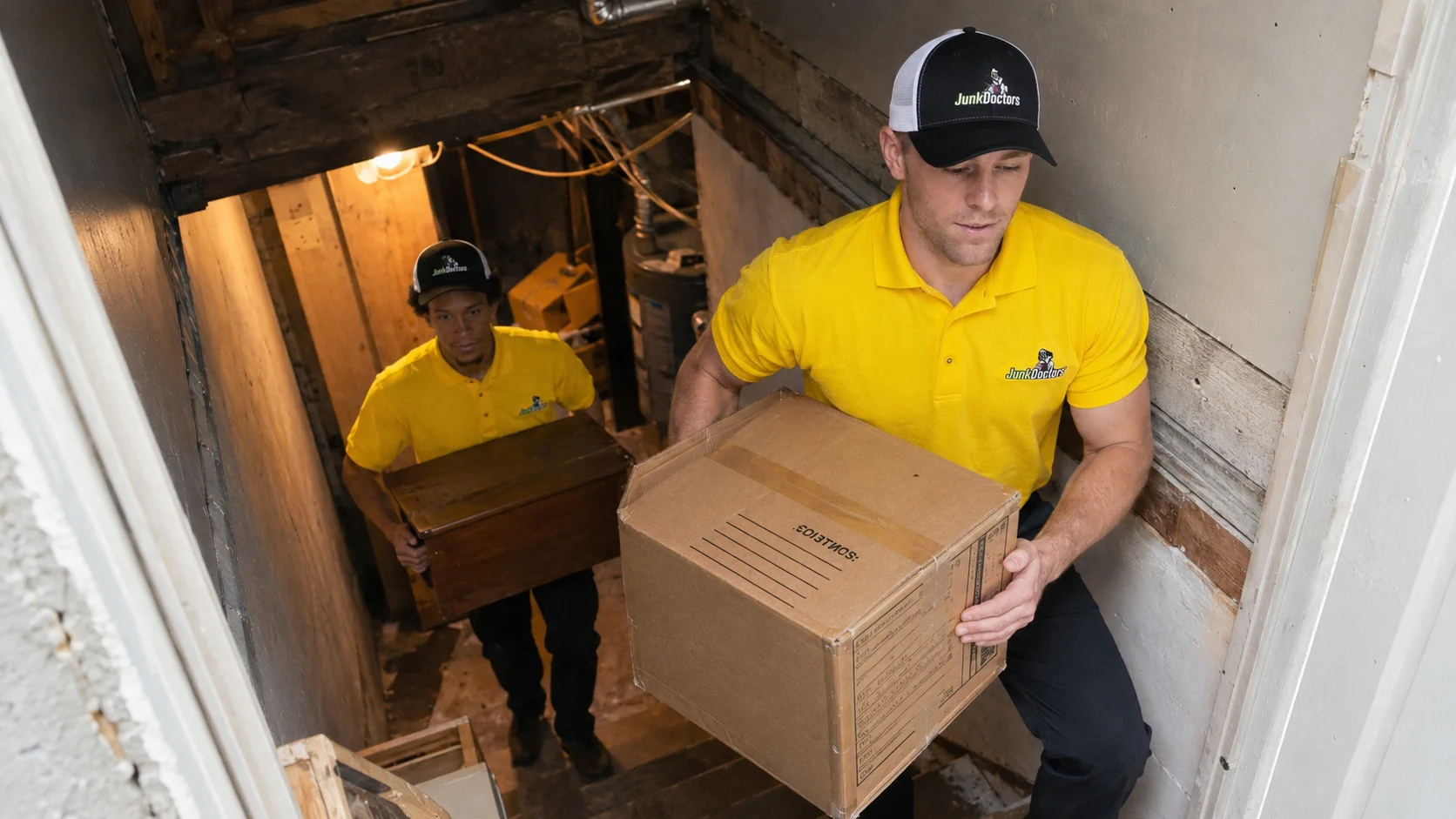
The Basement Problem Isn’t the Stuff. It’s the Stairs
Every item that leaves a basement comes up a stairwell. A chest freezer that takes 10 minutes to haul from a garage takes 45 minutes from a basement because it has to be tilted and carried in segments.
Before we start, we walk the basement and map the route:
- Stair width and turn radius at the top
- Any items that need partial disassembly to fit through
- Weight distribution for heavy appliances and exercise equipment
Most full basement clearouts need 2–3 crew members, not 1. We size the crew to the job after the site walk.
Flood and Water Damage: What to Expect
Water damage changes the weight and condition of everything it touches. Post-flood jobs are slower and harder than dry ones, and the pricing reflects that.
What we do on water-damaged jobs:
- Load in smaller pieces: waterlogged items often can’t be lifted as-is; they get broken down before moving
- Bag loose debris: wet cardboard and mixed debris goes in heavy-duty bags before it goes on the truck
- Leave the floor swept: after clearing, the crew sweeps and removes any remaining debris so the restoration team has a clean surface to work from
If the basement flooded recently and restoration is still in progress, coordinate timing with us. We work alongside water damage cleanup crews. For full-property situations, a basement cleanout often runs alongside a garage cleanout or attic cleanout. One crew, one visit.