
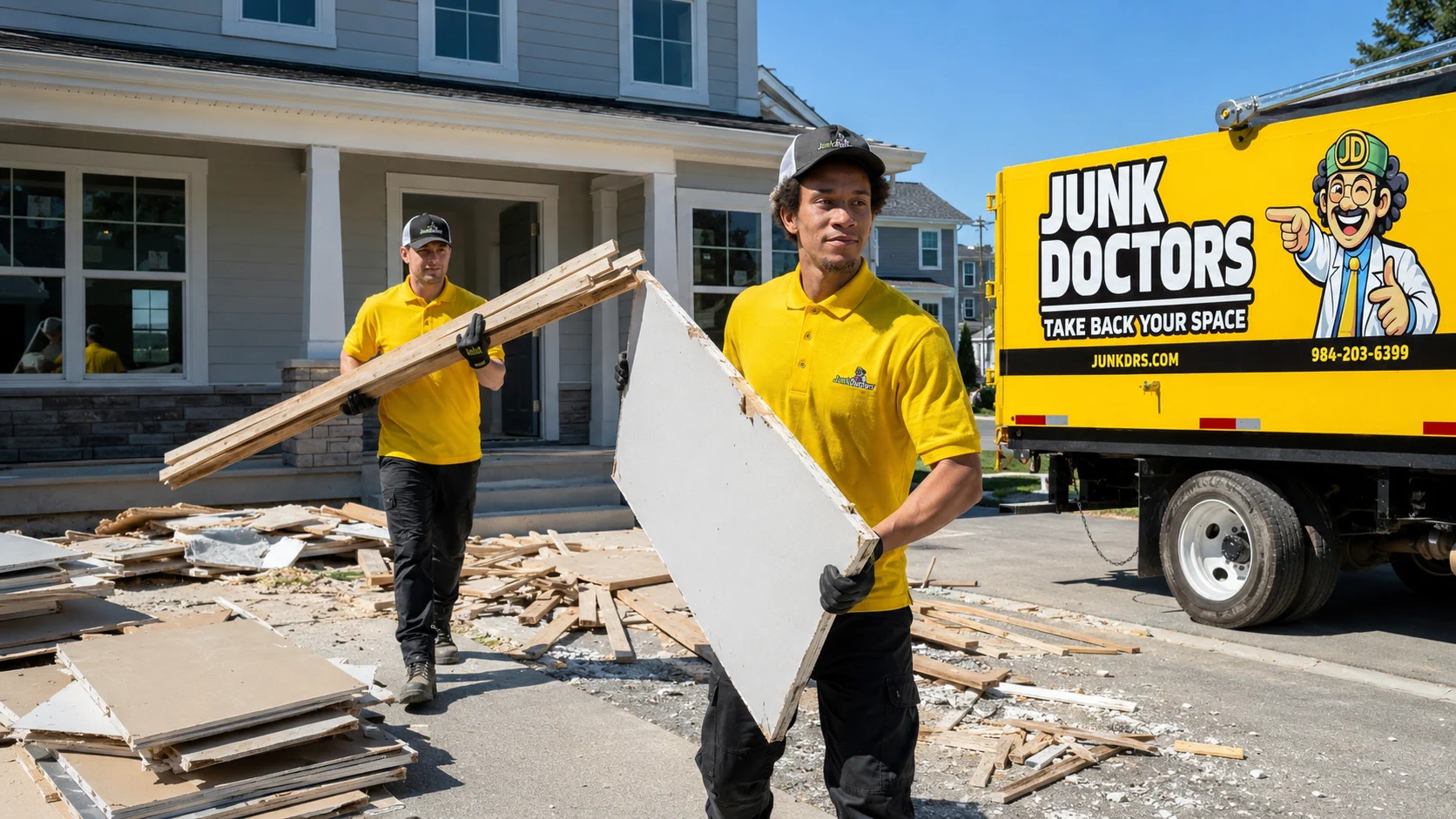
Construction Debris: Junk Removal or a Dumpster?
Here’s when each makes sense:
| Your Situation | Junk Removal | Dumpster Rental |
|---|---|---|
| Need the site cleared before the next trade arrives | ✓ Same-day available | 2–5 day delivery window |
| Single-phase project: one cleanup, done | ✓ Better fit | Pay for rental days you don't use |
| Heavy material: concrete, tile, brick | ✓ Weight-adjusted pricing upfront | Surprise weight overage charges |
| Multi-phase project over several weeks | Recurring pickups available | ✓ Better fit |
For most residential remodels, junk removal is faster and often cheaper: the debris is gone same day and you never paid for a box sitting in your driveway.
What Happens to Construction Debris After Pickup
Mixed loads go to licensed disposal facilities, after we pull out what can be diverted:
- Scrap metal: copper pipe, conduit, ductwork, and steel components are recycled where possible
- Clean wood: unpainted dimensional lumber and plywood can go to salvage partners where available
- Concrete and masonry: clean concrete and brick can go to aggregate recycling facilities
We don’t take asbestos-containing materials, lead paint debris, or regulated hazardous waste. See what we don’t take for a full list of restricted materials.
For full property cleanouts that include renovation debris plus furniture removal or appliance removal, we handle it all in a single job.