
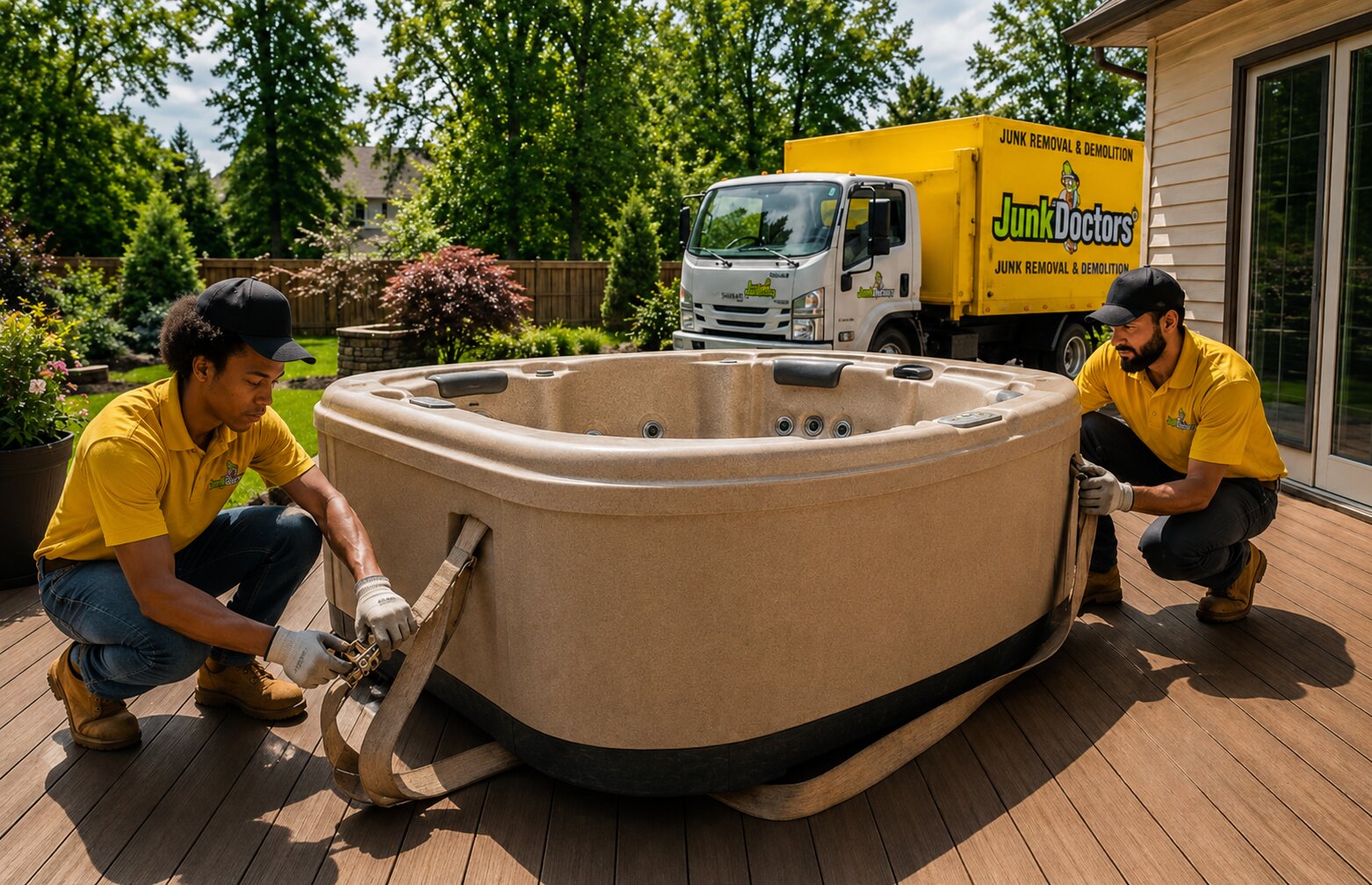
How Hot Tub Removal Actually Works
A hot tub can’t leave your yard in one piece. Most residential units weigh 600–900 lbs dry, and the shell is a single molded form. The process:
- Confirm power is off. The dedicated circuit breaker must be pulled before we touch the unit.
- Confirm water is drained. Use the bottom drain port and a garden hose, then a wet vac for the footwell.
- Cut the shell into sections. We use reciprocating saws to section the fiberglass shell into pieces that fit through your gate or access path.
- Remove frame and components. The cabinet frame, foam insulation, and pump equipment come out after the shell is sectioned.
- Load and haul. Everything goes on the truck in one trip.
The whole job typically takes 2–4 hours. In-ground spa surrounds or significant deck removal take longer.
Fiberglass Disposal: Why It’s Handled Differently
Hot tub shells are fiberglass, a regulated material that standard NC landfills don’t accept. We route shell sections to specialty processors. Metal frames and copper wiring are recycled where possible. Foam insulation goes to licensed disposal facilities.
Make sure whoever you hire disposes of the shell legally. If you’re also removing deck components or construction debris, we handle it all in one trip.