
North Carolina Junk Removal & Recycling Data: Where Your Stuff Goes in 2026
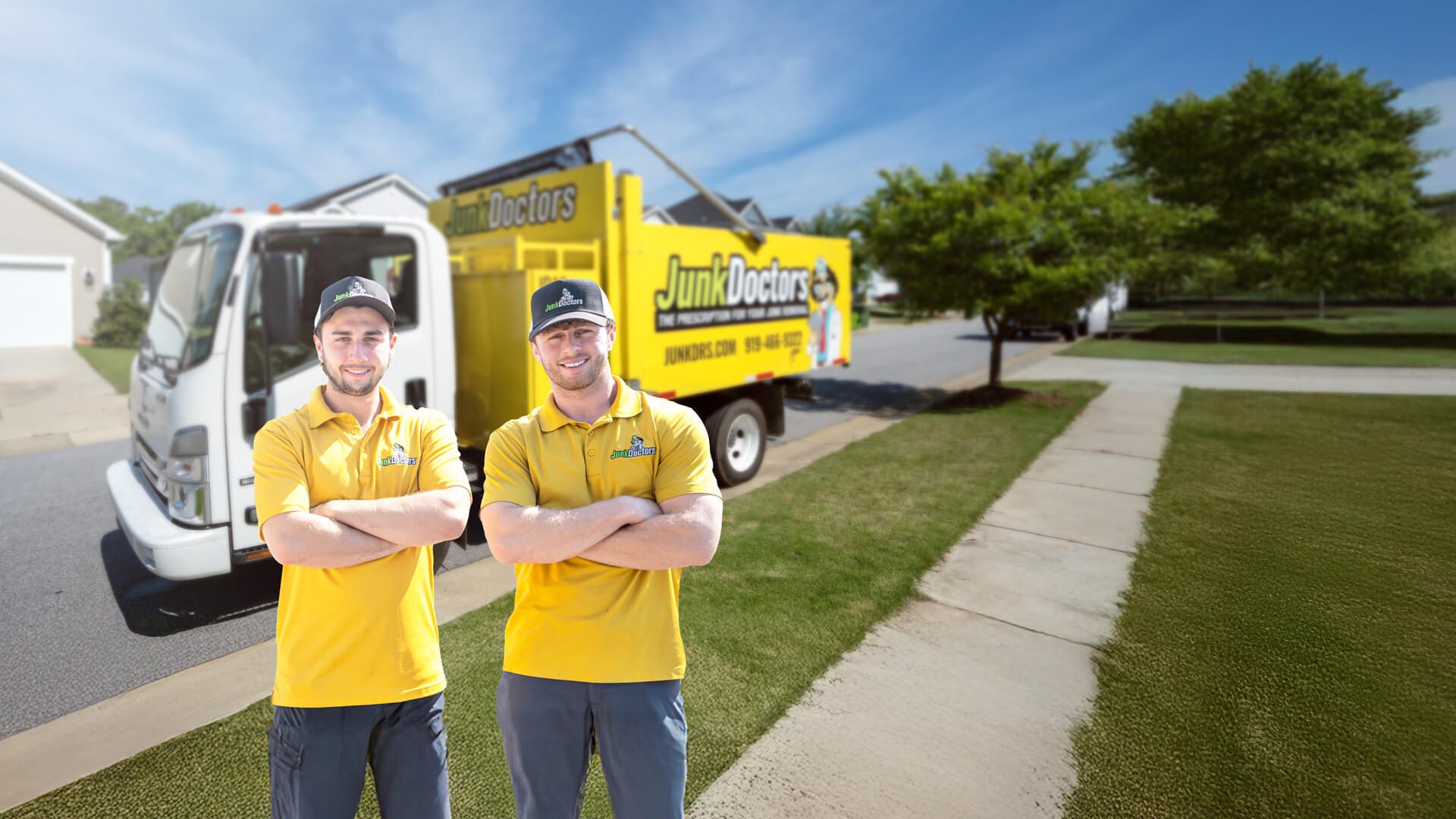
North Carolina generates millions of tons of municipal solid waste every year. Most of it goes to landfills. Junk removal companies are responsible for deciding what happens to the material they pick up, and the difference between a responsible hauler and a corner-cutter is where a load actually goes after it leaves your driveway.
This page provides North Carolina-specific data on waste streams, state recycling laws, and how Junk Doctors routes material across 45+ NC cities.
North Carolina Solid Waste: Key Facts
According to the NC Department of Environmental Quality (NC DEQ) Solid Waste Management Section, North Carolina’s waste profile shows significant room for diversion improvement:
| Metric | Data Point | Source |
|---|---|---|
| Active permitted landfills | 60+ | NC DEQ |
| Counties with curbside recycling access | 95 of 100 | NC DEQ |
| State recycling diversion goal | 40% by 2030 | NC Solid Waste Management Plan |
| Electronics landfill ban effective | January 1, 2011 | NC Session Law 2010-67 |
| Mattress recycling program coverage | Statewide | Mattress Recycling Council |
NC’s statewide diversion rate trails the 40% target, which is why how individual junk removal loads are sorted matters at scale.
What Happens to Your Stuff After Pickup
When a Junk Doctors crew loads a truck, every item is mentally sorted before it leaves the job site. Loads go to multiple stops depending on the item type.
| Item Category | Primary Route | Notes |
|---|---|---|
| Furniture (good condition) | Donated where possible | Must be free of major damage, stains, or structural failure |
| Appliances (working) | Donated where possible | Refrigerators and AC units require freon certification to donate |
| Mattresses | Recycled where possible | Recycling fee applies; steel springs, foam, and fiber separated |
| TVs / computer monitors | Recycled where possible | Recycling fee applies; NC landfill ban enforced |
| Computers, laptops | Recycled where possible | Same NC ban applies; hard drives wiped or destroyed |
| Scrap metal (all grades) | Recycled where possible | Metal is inherently recyclable |
| Cardboard / clean paper | Recycling stream | Sorted from load when present in quantity |
| Construction debris | Licensed C&D disposal facility | Separate regulated waste stream from MSW |
| Hazardous materials (paint, chemicals, batteries, propane) | NOT ACCEPTED | Requires certified HazMat handler; direct to county HHW program |
| Tires / motor vehicles | NOT ACCEPTED | Junk Doctors does not haul vehicles or tires in any form |
NC Electronics Recycling Law
NC Session Law 2010-67, effective January 1, 2011, prohibits the disposal of covered electronic devices (CEDs) in North Carolina landfills or incinerators. Violators can face civil penalties.
Covered devices include:
- Televisions (all technologies: LCD, plasma, CRT, OLED)
- Desktop computers and towers
- Laptop computers and tablets
- Computer monitors (standalone)
- Computer peripherals (keyboards, mice, printers): encouraged to recycle but not explicitly banned
Items not covered under the 2010 law (but still best recycled through e-waste recyclers):
- Cell phones and smartphones
- Stereo equipment and AV receivers
- Small electronics (clocks, cameras)
What this means in practice: If a junk removal company tosses your TV in a roll-off dumpster that goes to a NC landfill, that company is violating state law. Junk Doctors routes all CEDs to NC-permitted e-waste processors.
Donation Organizations in NC
| Organization | NC Markets Served | What They Accept |
|---|---|---|
| Habitat for Humanity ReStore | Raleigh, Durham, Chapel Hill, Charlotte, Greensboro, Winston-Salem, Asheville, Wilmington, and more | Furniture, appliances, building materials, tools, fixtures |
| Goodwill Industries of NC | Statewide (~80+ locations) | Clothing, small furniture, housewares, working electronics |
| Salvation Army Family Stores | Triangle, Triad, Charlotte | Furniture (limited), clothing, housewares |
Items donated to these organizations support affordable housing (ReStore) and workforce development programs (Goodwill, Salvation Army). Junk Doctors donates usable items where possible.
Condition requirement: Donation organizations accept items only in usable condition. Where possible, Junk Doctors donates items that meet each organization’s intake standards; we do not take unusable furniture to ReStore and call it a “donation.”
What We Cannot Donate or Recycle (and Why)
Some items have no viable donation or recycling stream in NC and must go to licensed disposal:
| Item | Reason for Landfill Disposal |
|---|---|
| Broken or heavily stained furniture | No donation organization accepts damaged goods |
| Non-CED electronics (VCRs, cassette players) | Not covered by NC ban; recyclers often do not accept |
| Foam packing and foam mattress toppers | No consistent NC recycling stream |
| Mixed material composites (MDF furniture) | Wood + adhesive combination is not recyclable |
| Soiled textiles (carpet, upholstery with damage) | Landfill only |
We are transparent about this: not everything gets recycled. Junk removal companies that claim “we recycle everything” are not being accurate about what happens downstream.
NC County Household Hazardous Waste Programs
For items Junk Doctors cannot accept, NC DEQ funds county-level Household Hazardous Waste (HHW) collection programs. Most NC counties run quarterly events or maintain permanent collection sites:
| Item Type | Where to Bring It in NC |
|---|---|
| Latex and oil-based paint | County HHW event or PaintCare drop-off |
| Motor oil and automotive fluids | Auto parts stores (AutoZone, O’Reilly) |
| Propane tanks | Local hardware stores or county HHW |
| Batteries (rechargeable) | Call2Recycle drop-offs at Home Depot, Lowe’s |
| Fluorescent bulbs | Home Depot, Lowe’s, or county HHW |
| Medications | Local pharmacy take-back or DEA disposal events |
Search nc.gov for “household hazardous waste” + your county name for schedules.
Junk Doctors’ NC Footprint (2011–2026)
Junk Doctors has operated in North Carolina since 2011, with 15 years of load-by-load sorting decisions:
| Operational Data | Figure |
|---|---|
| Years in NC | 15 (founded 2011) |
| NC cities served | 45+ |
| Verified Google reviews | 3,080+ |
| Google rating | 4.9 stars |
| Mattresses accepted for recycling | Yes (certified recycler; recycling fee applies) |
| TVs / electronics accepted | Yes (certified e-waste; recycling fee applies) |
| Metal recycling | Yes (no extra charge) |
| Donation assessment on every load | Yes (standard practice) |
Our 4.9 rating across 3,080+ Google reviews reflects not just speed and price, but consistent follow-through on where material actually goes.
How to Ask Your Junk Removal Company About Recycling
Before booking any junk hauler in NC, ask these questions:
- “Where do you take electronics?” A legitimate answer names a specific NC-permitted e-waste recycler, not “the dump” or “a recycling center.”
- “Do you donate furniture?” A legitimate answer names a specific organization (ReStore, Goodwill).
- “What happens to mattresses?” Mattress recycling costs money. A company that doesn’t charge a fee is likely not recycling them.
- “Are you licensed and insured in NC?” All commercial waste haulers operating in NC must be appropriately licensed.
Junk Doctors answers all four directly.
Frequently Asked Questions
Does Junk Doctors recycle in North Carolina?
Yes, where possible. Every load is sorted before disposal. Scrap metal, electronics, and mattresses are recycled where possible, and working appliances and furniture are donated where possible. Only material that cannot be donated or recycled goes to a licensed disposal facility.
What electronics cannot go to a landfill in North Carolina?
Under NC Session Law 2010-67 (effective January 1, 2011), covered electronic devices, such as televisions, desktop computers, laptop computers, and computer monitors, are banned from North Carolina landfills and must be recycled through certified e-waste handlers.
Does Junk Doctors charge extra for electronics recycling?
TVs and electronics carry a small recycling fee depending on size because certified e-waste processors charge a handling cost. There is no additional fee for furniture, metal, or general junk; those are included in the standard load price.
Can I get a donation receipt if Junk Doctors donates my items?
When items are taken to Habitat for Humanity ReStore, the ReStore provides a donation receipt directly. Junk Doctors can note which items were donated, but the tax receipt is issued by the nonprofit, not by us.
How much of a typical load is actually recycled or donated?
Based on our 15 years of operations in NC, the share of a load that is donated or recycled depends on what is in it. We donate and recycle where possible, and an estate cleanout with good-condition furniture skews much higher.
Services related to this guide
We work throughout the Triangle, Charlotte metro and the Triad: junk removal in Raleigh, junk removal in Charlotte, junk removal in Greensboro plus the surrounding towns. See every area we cover.
Ready to schedule your pickup?
Call before 3pm and we can usually be there the same day.
(919) 466-9322